About Evohe
A Proven Expedition Vessel Built for the World's Most Remote Destinations
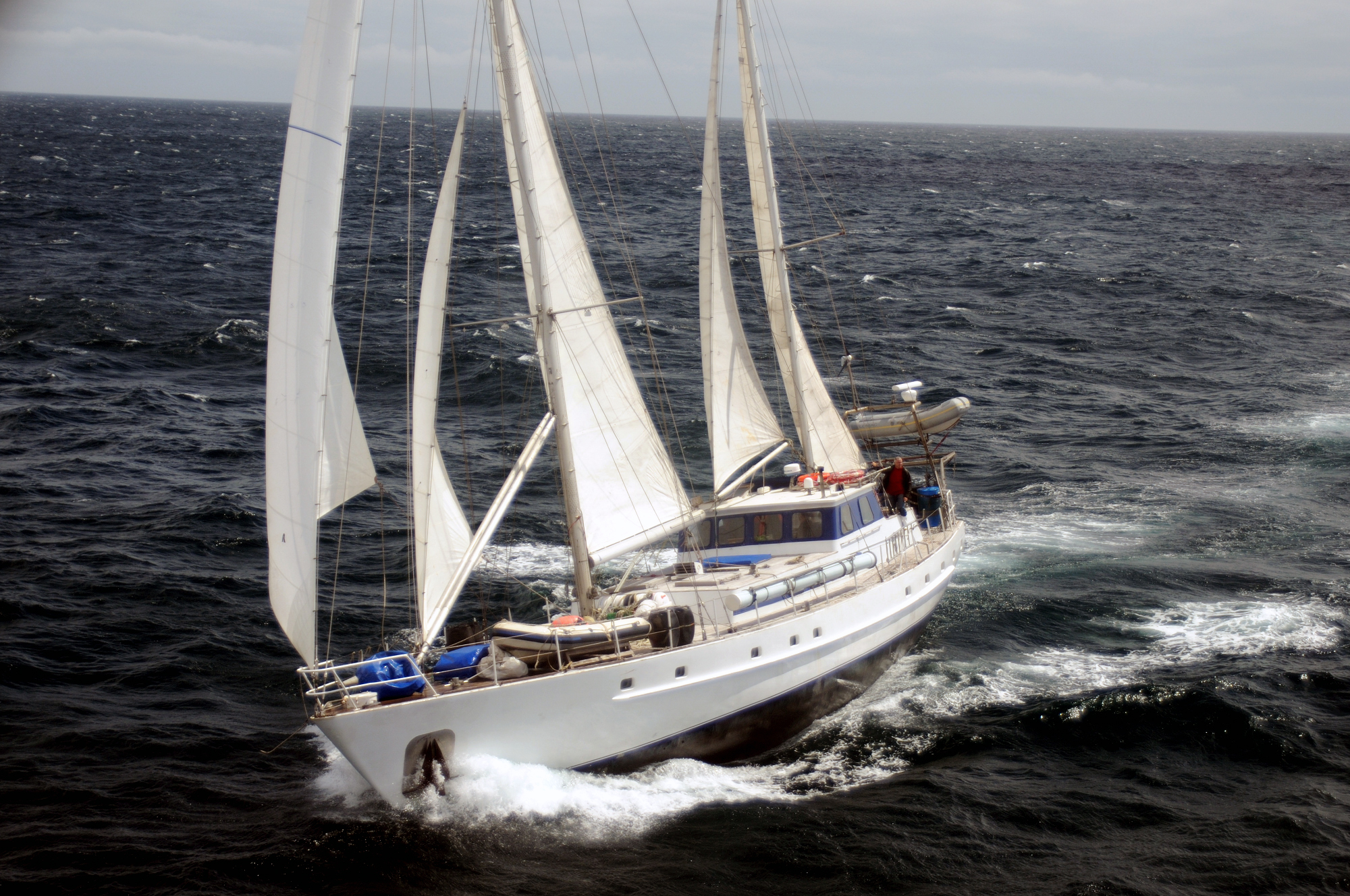
Evohe is a New Zealand-registered, 25-metre steel-hulled expedition vessel purpose-built to operate in some of the world's most demanding environments. Accommodating up to 12 passengers and 7 crew, Evohe combines exceptional endurance, reliability, and self-sufficiency, making her an ideal platform for scientific, conservation, adventure, film, and exploration expeditions.
Built by the renowned De Wachter Shipyard in Antwerp, Belgium, in 1979, Evohe was designed from the outset for long-range operations in harsh and remote conditions. Her robust steel construction, redundant critical systems, and substantial fuel and water-making capabilities allow her to remain independent for extended periods far from ports or support infrastructure.
Every essential onboard system is duplicated, including her twin main engines, ensuring reliability and resilience when operating in challenging environments. With extensive fuel capacity, freshwater production, freezer storage, and onboard support facilities, Evohe can sustain expeditions for months at a time.
Over her distinguished career, Evohe has successfully supported numerous international expeditions, including a remarkable transit of the Northwest Passage, navigating from the Pacific Ocean to the Atlantic through the Canadian Arctic. This proven track record reflects her reputation as a capable and dependable expedition vessel trusted in some of the world's most remote waters.
In addition to comprehensive safety systems and modern communications technology, including Starlink satellite connectivity, Evohe carries two rigid inflatable tenders (RIBs), providing flexible access to shorelines, research sites, dive locations, and remote anchorages.
Why Choose Evohe?
Proven expedition vessel with extensive polar and remote-area experience
Commercially surveyed in New Zealand for offshore and unlimited operations
Steel construction designed for harsh maritime conditions
Self-sufficient for extended operations
Twin-engine redundancy for enhanced safety and reliability
Freshwater production onboard
Ample fuel and freezer capacity for long-duration voyages
Equipped with two expedition tenders for remote access and support
Ideal for scientific, environmental, film, tourism, and exploration projects
Vessel Specifications
Dimensions
Length Overall: 25m (82ft)
Beam: 6.9m (20ft)
Draft: 3m (10ft)
Gross Registered Tonnage: 87.58 tonnes
Net Registered Tonnage: 69.13 tonnes
Design & Construction
Designer: A. Defrere
Builder: De Wachter Shipyard, Antwerp
Year Launched: 1979
Hull Material: Steel
Keel: Steel with lead ballast
Hull Thickness: 8mm bilge, 7mm topsides, 6mm superstructure
Decking: 30mm teak
Propulsion & Performance
Main Engines: 2 × Ford 6-cylinder diesel engines (135hp each)
Transmission: Twin Disc
Maximum Cruising Speed: 10 knots
Fuel Capacity: 8,000 litres
Water & Power Systems
Fresh Water Capacity: 3,000 litres
Watermaker: 80 litres per hour
Water Tanks: Stainless steel
Power Supply: 230V AC, 24V DC and 12V DC
Accommodation & Facilities
Passenger Capacity: 12 passengers
Crew Capacity: 7 crew
Galley: Fully equipped
Freezer Capacity: 440 litres
Navigation & Communications
VHF Radio: Marine VHF communications
SSB Radio: Long-range HF/SSB communications
Starlink: Satellite internet connectivity
Safety Equipment
Liferafts: SOLAS A, capacity 20 persons
Immersion Suits: 19 cold-water survival suits
Life Jackets: 20